


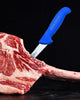
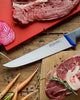




















When talking about cutting fish, how can we not think of the sole fillet knife ? This essential tool in the fishmonger's shop is appreciated by both professionals and home cooks. Its long, flexible, and pointed blade is the perfect ally for anyone wanting to create aesthetically pleasing fish fillets of the ideal thickness. It is generally equipped with a stainless steel blade to resist corrosion, as it is used in humid environments. This type of steel also provides resistance to the iodine present in seafood. The professional sole fillet knife will be your daily companion for all your cutting needs!
Lire la suite


Why choose a knife specifically designed for sole fillets?
The sole fillet knife is essential for anyone who works with fish, whether in a professional kitchen or at home. Unlike a simple fish knife, it has a thin, flexible, and pointed blade that allows for precise cuts without damaging the flesh. This tool is particularly appreciated for delicately filleting fish, following the central bone, and achieving a clean finish. The professional sole fillet knife is designed to withstand intensive use in fishmongers or restaurants. Some models, such as the Japanese sole fillet knife, stand out for their exceptional sharpness and ergonomic design for optimal performance.
What are the key criteria to consider when choosing a sole fillet knife?
Choosing the right sole fillet knife depends on several key criteria. The flexibility of the blade is paramount: it must be supple enough to follow the contours of the fish, yet robust enough not to bend. A fillet knife with a stainless steel blade is often preferred because it resists corrosion and moisture. The blade length, the type of handle, and the overall balance of the tool are also important factors to consider. A fish fillet knife must offer comfort and safety for extended use.
What shape and length of blade depending on the intended use?
The shape and size of the blade directly influence the precision of the movement. A filleting knife measuring 16 to 19 cm is ideal for working with most medium-sized fish such as sea bream or sea bass. For larger species, a longer blade will be necessary. Flexibility is also a key criterion: a flexible blade allows you to follow the bone closely, while a semi-rigid blade provides greater stability. The fish filleting knife should therefore be chosen according to its intended use: thin fillets, sashimi cuts, or preparing larger fish.
Which blade materials offer the best advantages?
Stainless steel is the most commonly used material for fillet knives because it is highly resistant to moisture and the iodine present in fish. Some Japanese sole fillet knives are forged from very hard steels, offering a durable edge and unparalleled cutting precision. Carbon steel blades are also available; these are very efficient but require more rigorous maintenance. The choice of material therefore depends on the desired balance between performance, durability, and ease of care.
What type of handle provides the best grip in a humid kitchen?
The handle is an often underestimated but essential element. In a humid environment like a fish market, it must be non-slip and ergonomic. Professional fillet knives are often equipped with handles made of polymer or antibacterial composite materials, compliant with HACCP standards. These materials limit the risk of slipping and guarantee impeccable hygiene. Some high-end models also incorporate a steel reinforcement to improve the knife's durability and balance.
How to use a sole fillet knife
Using a filleting knife for sole requires a certain technique. You must hold the fish firmly and slide the blade along the central bone in long, smooth strokes. To remove the skin, the blade should be placed under the fillet and then gently guided until it separates completely. This fish filleting knife can also be used to prepare sashimi, carpaccio, or to slice other thin meats. With a sharp filleting knife, you will obtain clean fillets, ready to be cooked or presented.
How to best maintain and sharpen your knife?
A Japanese or classic fillet knife requires careful maintenance. Hand washing is recommended, followed by immediate drying to prevent oxidation. Regular sharpening with a suitable whetstone or honing steel is essential to maintain an optimal edge. Store it in a case or on a magnetic holder to protect the blade and prolong its lifespan. By following these simple steps, your fillet knife will maintain its performance and serve you well for all your fish preparations.
Take a quick look at our range of kitchen clothing , and find all our chef jackets as well as our matching trousers.


