


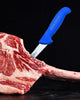































A bleeding knife is essential for any butcher! Designed for professional use, this knife is used in butcher shops, delicatessens, and slaughterhouses. However, that doesn't mean you can't use it if you're a home cook!
It is one of the many essential knives in butchery, along with, among others, the boning knife, the slicing knife or the ham knife.
Specifically designed for piercing meat, here's how to use a bleeding knife.
Lire la suite
17 products


What is a bleeding knife?
The bleeding knife is an essential tool in the butchery and charcuterie trades. Designed specifically to pierce the meat and facilitate the flow of blood, it is distinguished by its thin, flexible, and very sharp blade. Unlike a boning or slicing knife, the bleeding knife is designed for precise work, without altering the appearance of the meat.
This tool is used daily by butchers, delicatessen owners, and slaughterhouse workers, but it also finds its place among home cooks passionate about food. Its short blade, measuring on average between 10 and 15 cm, makes it a handy and practical knife, ideal for working with raw meat or game.
What types of bleeding knives are there?
There are different models of bleeding knives, adapted to the needs and types of meat being processed.
- The bleeding knife for poultry and rabbits : small in size, it allows a clean and precise cut on small animals.
- The bleeding knife for red meat : equipped with a more robust blade, it is designed to penetrate the flesh deeply and ensure effective bleeding.
- Versatile models : some bleeding knives can also be used to slice or cut pieces of meat.
Each butcher or apprentice will choose their knife according to their daily use and the nature of the meats worked.
How to choose the right bleeding knife?
Choosing a bleeding knife depends on several criteria. First and foremost, you must ensure that the blade is made of stainless steel to guarantee corrosion resistance and a long lifespan. Secondly, it is essential that the handle be ergonomic and sturdy, as using it requires a certain amount of strength and a steady hand.
Professionals prefer knives that comply with HACCP standards , which are essential for maintaining hygiene in butcher shops and restaurants. Finally, ease of use is important, especially if you have to handle your butcher's knife for several hours a day.
What blade length and shape should be preferred depending on the tasks to be performed?
The blade length of a bleeding knife typically ranges from 10 to 15 cm . A shorter blade is ideal for poultry, rabbits, or small game. Conversely, a slightly longer blade is more suitable for red meat or thicker cuts.
The pointed shape of the blade is essential, as it allows for easy and effortless penetration into the flesh. The blade's flexibility, meanwhile, contributes to precise and clean cuts without damaging the meat's appearance.
Blade material, handle... other selection criteria not to be overlooked
The blade material plays a crucial role in the performance of a bleeding knife. Stainless steel is the most common because it offers great strength and effectively resists rust. Some high-end models feature reinforced steels, guaranteeing a long-lasting edge.
The handle, meanwhile, must be comfortable and non-slip to ensure an optimal grip. Polypropylene or treated wood handles are commonly used, each offering its own advantages in terms of durability and maintenance.
Which bleeding knife model best suits your professional profile or budget?
- For butchery students or apprentices : a standard-sized bleeding knife with an ergonomic handle will suffice to learn the correct techniques.
- For professionals in butcher shops or slaughterhouses : it is recommended to invest in a high-end bleeding knife, capable of withstanding intensive use.
- For individuals passionate about cooking : a versatile, easy-to-clean and dishwasher-safe model will be the most practical option.
At Manelli, you will find models to suit every profile and every budget, all selected for their quality and durability.
How to effectively maintain a bleeding knife to optimize its lifespan?
A well-maintained bleeding knife will last for many years. After each use, it is advisable to wash it by hand with warm water and mild soap, then dry it thoroughly to prevent corrosion.
Regular sharpening is also essential to maintain an optimal edge. You can use a whetstone or a suitable sharpening steel. Finally, always store your bleeding knife in a sheath or knife block to protect the blade and prevent accidents.
Discover more with our kitchen and butcher clothing !


